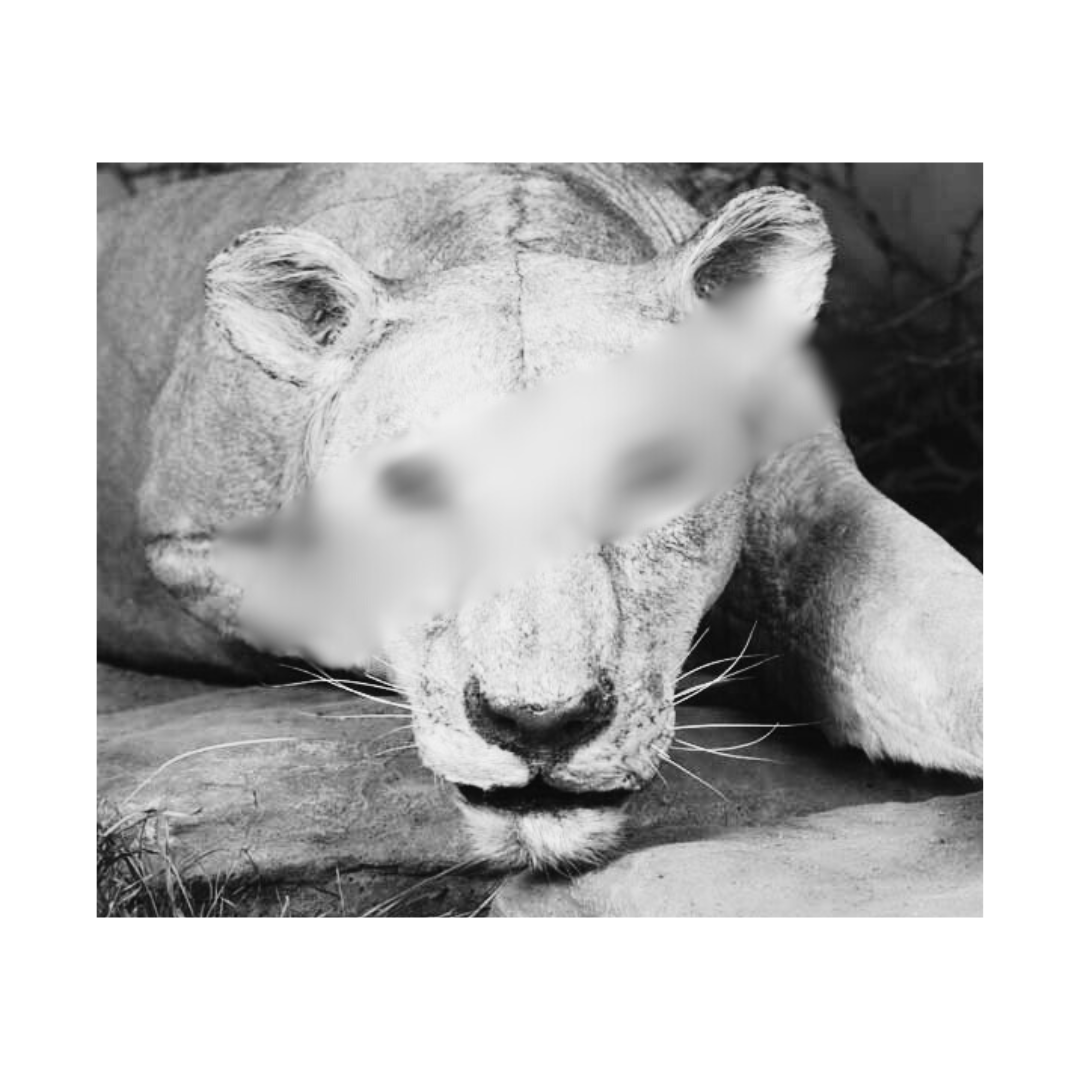
Many years ago, I taught “The Short Happy Life of Francis Macomber,” Hemingway’s short story about a man who proves himself a coward during a lion hunt. To better help my students understand Macomber’s fear, I showed the movie The Ghost and the Darkness, based on the true story of the man-eating lions of Tsavo. In 1898, these lions terrorized the people working to extend the Ugandan railway over the Tsavo River in Kenya.
It wasn’t until I taught the story and showed the movie a few more times that I learned the two lions still prowled the shadows.
It wasn’t until a few years later I found they lurked not far from my home.
—
The lions of Tsavo were first estimated to have killed upwards of 130 railway workers. Recent studies suggest the number was inflated, and the kill count was more likely in the 30s.
Still, 30 deaths is no small number.
By nature, lions are solitary hunters, and it is the lioness that finds game Not so with the Lions of Tsavo. Both male, these lions hunted together, working in tandem to stalk their prey and remain virtually undetectable.
Through the writing of the script for The Ghost and the Darkness, author William Goldman believed that pure evil, in the shape of two lions, “popped out of the ground at Tsavo.”
Scientists disagree. Instead, they argue the lions suffered a dental deformity. Postmortem studies revealed the lions’ teeth were similar to that of a lion in a zoo, who had been fed nothing but softer food and had never been required to tear through tough hide or chew through tendons and bones.
Scientists believe the lions’ taste for humans began by scavenging human corpses. Once they found human flesh was softer and easier on their teeth, their path was set.
Somehow, that seems even more terrifying than believing the devil stalked that small African nation.
—
Eventually, Lt. Col. John Henry Patterson brought the lions down. He skinned the lions and turned their hides into trophy rugs.
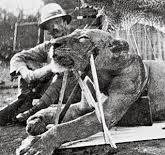
Patterson later sold the hides to the Field Museum in Chicago for $5000. Conservationists used the hides to reconstruct the lions, which are housed in the museum still, as inseparable in death as they were in life.
I’ve visited them numerous times. The larger of the two spans over nine feet from head to tail, but otherwise, they don’t appear the lions of a nightmare. They are impressive but not overly so. They are rather plain; their tawny hides are scarred and battered.
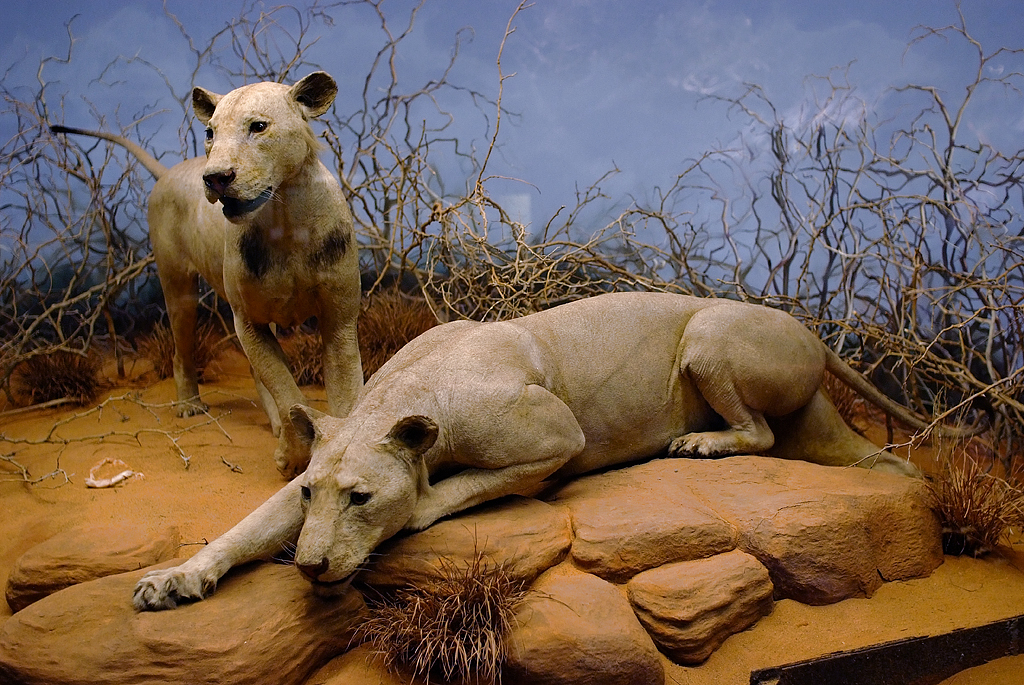
Neither of the lions has the manes commonly associated with male lions.
Still, perhaps in light of their history, they are unnerving.
They seem to be watching. Always watching. Perpetually eyeing the soft flesh of those standing just on the other side of the glass.
—
I visited the museum last week. I’m sure I must have seen this other specimen before, but if I had, it was lost in my memory.
Maybe for good reason.
You see, another man-eater resides at the Field Museum.
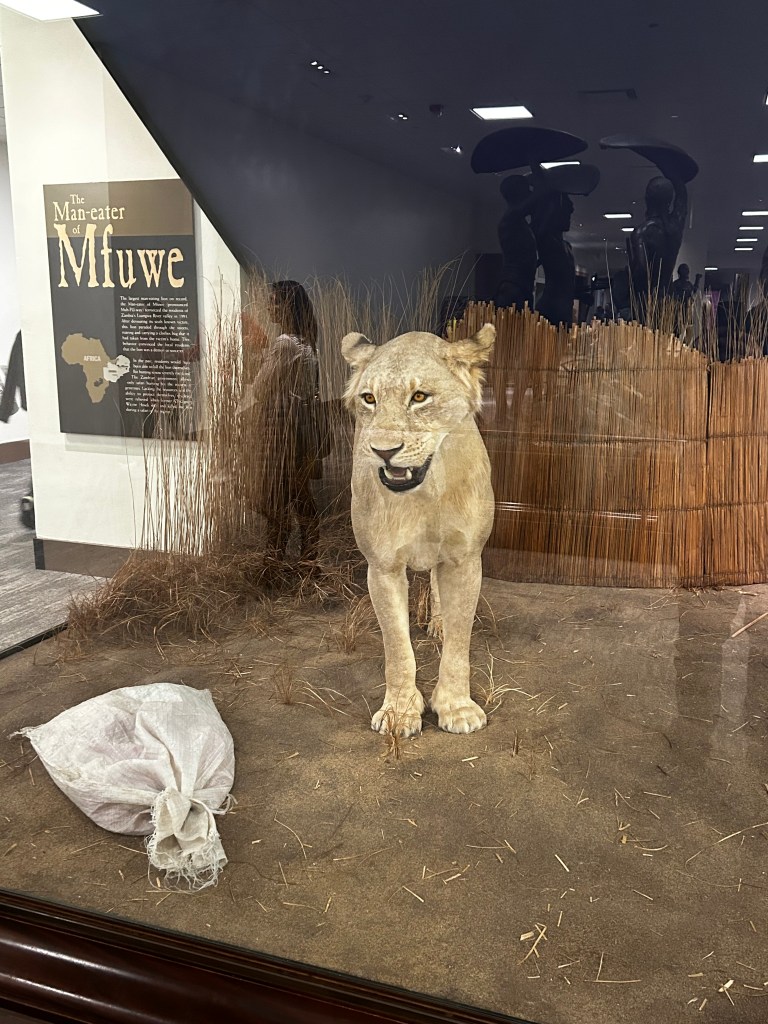
That lion is The Man Eater of Mfuwe, which savaged a small village in Zambia, not in the 1800s, but in 1991.
Like the lions of Tsavo, this lion was also male–and had no mane.
—
The Mfuwe lion ranks as the largest man-eating lion ever killed, measuring over 10 feet long and weighing over 500 pounds. The lion killed six people in total, a number far less than any of the estimated Tsalvo killings.
But it was the manner of the killings that traumatized the African village.
In two separate incidents, the Mfuwe lion burst through the doors of village huts, snagging the female occupants and dragging them from their homes.
But the lion was not done.
The day after killing the second woman, the lion returned to the woman’s home. In broad daylight, the lion strolled back inside and retrieved a cloth bag the woman used for laundry.
Carrying that bag in its teeth, the lion took it to the village square, dropped it directly in the center, and stood over it, roaring in full sight of the horrified villagers.
When it grew bored, the lion snatched the bag in its jaws and left.
The man-eater was afterward seen carrying the bag around the countryside, sometimes playing with it, but most often dropping it over and over, day in and day out, to roar over it, again and again, as if taunting the villagers and daring them to stop him.
—
The lion was a demon, the villagers said. Or a sorcerer who took the form of the lion to exact revenge for some unknown slight.
To this day, in the case of The Man-Eater of Mfuwe, science has remained mute…
—
For more on the Lions of Tsavo and the Man-Eater or Mfuwe visit the Field Museum’s website here.
 Paranormal Pressings
Leave a comment